About
ChyanneRobbins.com is an independent research publication: an evolving body of work documenting investigations into human experience, rather than a traditional portfolio.
The goal isn't simply to explain the answer, but to explore it, in research, writing, and images that approach it through behavioral science, design, technology, systems thinking, and public health.
Some investigations stay concept studies. Others grow into articles, prototypes, products, services, or collaborations.
— Chyanne Robbins
About the Author
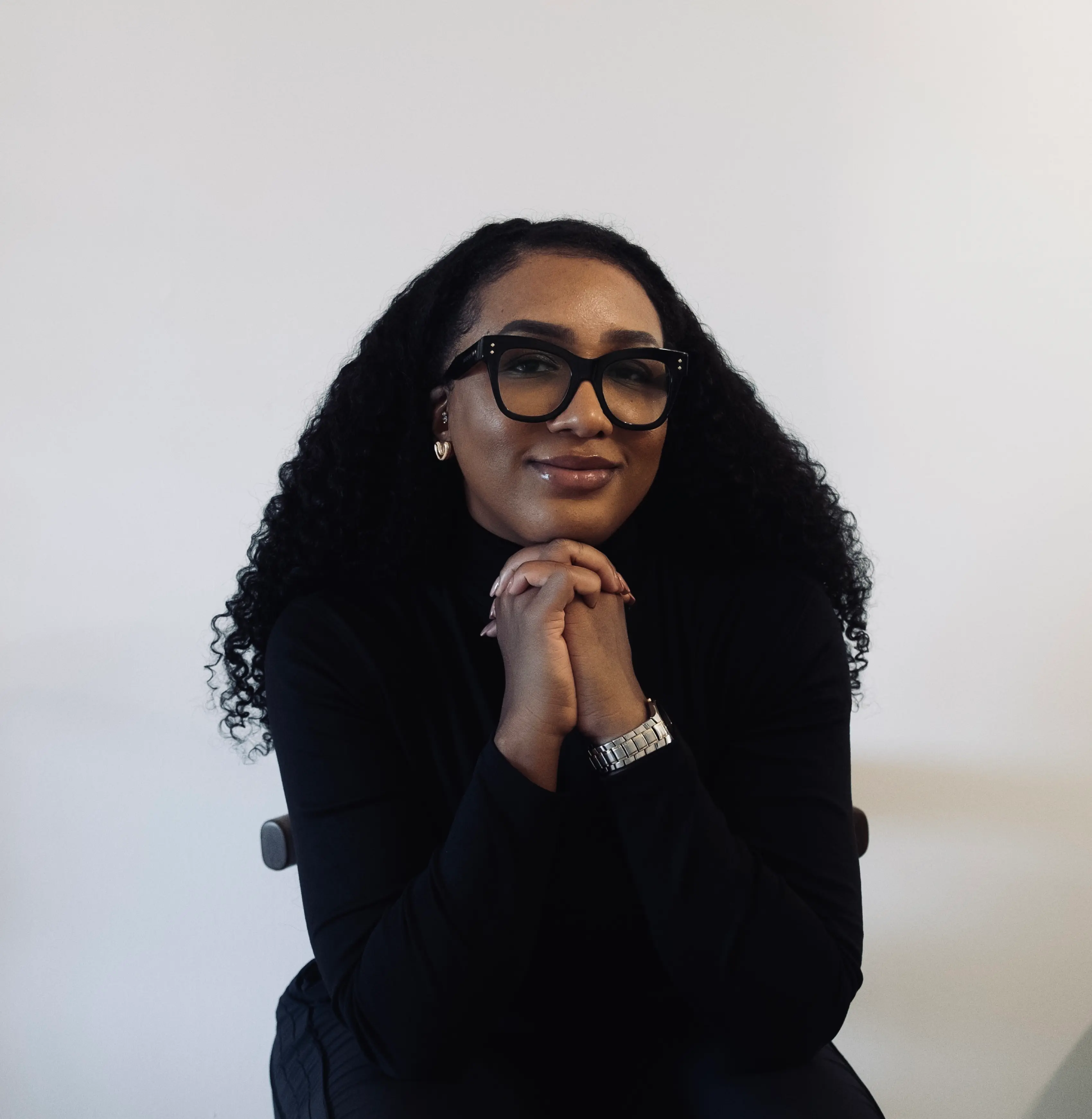
For one assignment, we worked in pairs.
The instructions were simple. Walk around campus. Find someone sitting alone. One of us would sit down next to them — closer than you normally would. The other would watch. Not say anything. Just watch.
I don't remember the lesson anymore. I remember what happened instead.
I remember sitting down next to a stranger, and something in them shifting before either of us said a word.
After that, I started noticing it everywhere. Not on purpose. It just didn't turn off.
Body language. The length of a pause before someone answered. Where people's eyes went when they were deciding what to say. How far someone stood from another person, and what that distance meant even when nobody mentioned it.
Then it turned inward. I started noticing myself the same way — how I responded in conversations, what I was communicating without meaning to, how much of what I said wasn't actually in the words.
I didn't have a name for any of this yet. I just couldn't stop seeing it.
I don't remember one specific argument or reading from a different class. What I remember is watching my classmates disagree with the professor — often, and sometimes pretty passionately.
I rarely spoke. I wasn't trying to win anything. I was just fascinated, watching it happen.
Up until then, I think I'd assumed difficult questions had a correct answer sitting somewhere, waiting to be found, if you reasoned carefully enough. What I watched in that room didn't fit that. People reasoned carefully — genuinely carefully — and still ended up in different places, each of them able to explain exactly how they'd gotten there.
Nobody was winning. They just kept arriving somewhere different.
At the pharmacy counter, I watched the same thing happen over and over. People picking up medication for conditions that were, more often than not, connected to how they lived.
Outside of work, I started hearing the same thing in different words, sometimes from people I knew well. Someone would tell me what a doctor had told them to change. Then tell me why they weren't going to.
Not because they didn't understand it. They usually did.
It came down to something closer to: I'd rather just take the medicine.
None of these were the same person, and none of them said it exactly like that. But after enough of them, it stopped sounding like individual choices and started sounding like one answer, showing up everywhere.
The problem was never only information. Most people already had it. The harder question — the one that actually stayed with me — was why the information wasn't becoming behavior.
For a long time, none of it felt connected. Each thing I noticed felt like its own thing, not evidence of anything larger.
It took years of running into the same question in rooms that had nothing to do with each other before I stopped being able to call it a coincidence.
At some point, noticing wasn't enough anymore.
I started writing things down.
I still do. Some of that is starting an investigation somewhere I didn't expect to look. Some of it is going back and revising something I already wrote — a standard, a habit, a page like this one — because it stopped telling the truth as well as it used to.
I don't think I've fully figured out why this particular question is the one that stayed, out of everything else I could have followed instead.
I didn't know they were the same question. I just kept asking it, in different rooms.